

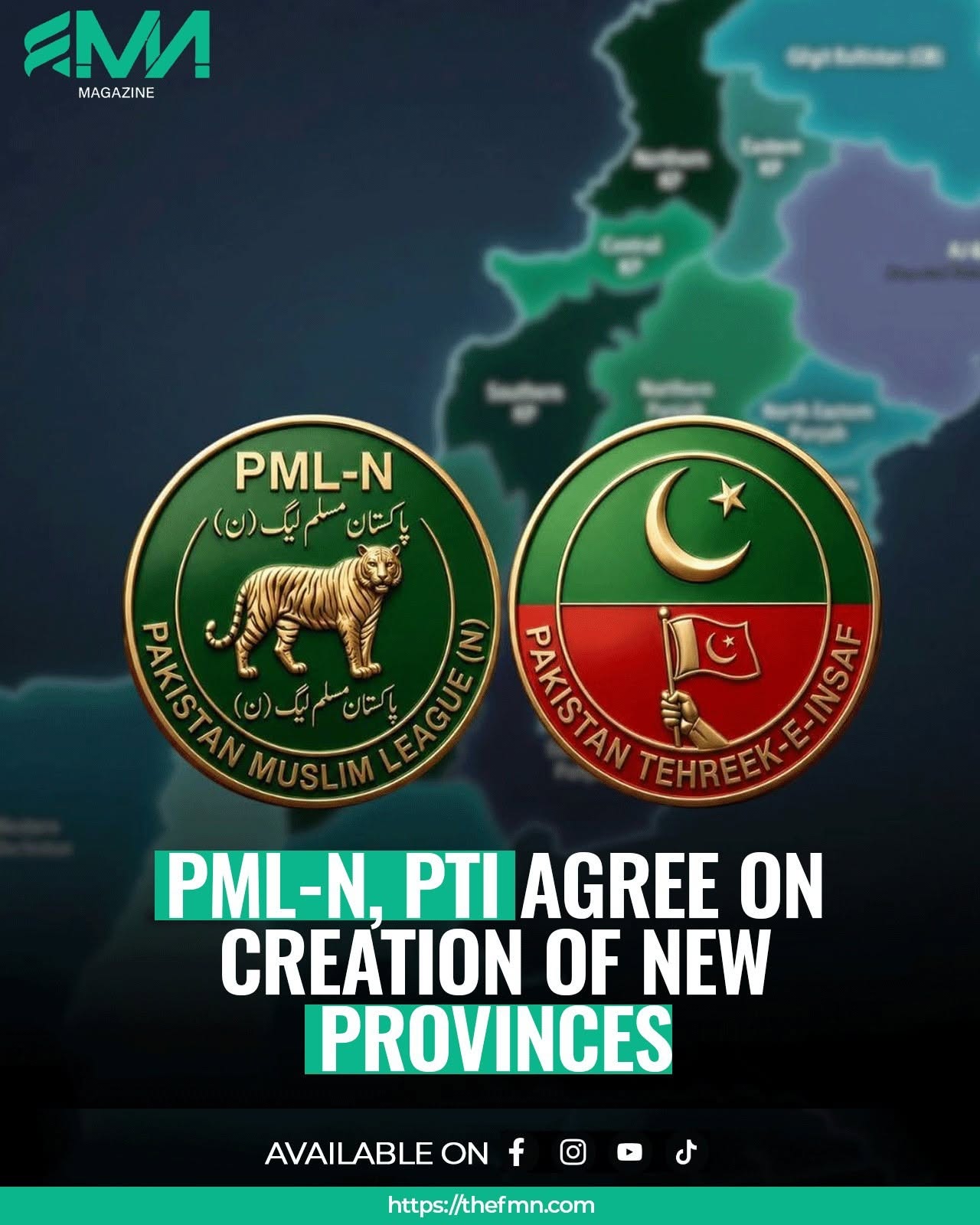
In a development that could have a major impact on Pakistan’s political and administrative landscape, PML-N and PTI leaders appear to be on the same page over one major issue: the creation of new provinces.
Despite their deep political differences, leaders from both parties have publicly backed the idea of creating additional provinces, with South Punjab emerging as the first potential new province.
The unexpected agreement came during a television appearance, where representatives of both parties expressed support for changing Pakistan’s existing administrative structure.
‘New Provinces Will Definitely Be Formed’
Federal Minister for Defence Production Raza Hayat Hiraj made a strong statement, saying new provinces will “definitely” be created.
Hiraj also dismissed speculation about political changes at the federal level, saying neither Prime Minister Shehbaz Sharif nor Interior Minister Mohsin Naqvi are going anywhere.
According to Hiraj, the prime minister himself will oversee the creation of the new provinces.
His comments add weight to growing discussions in political circles about whether Pakistan could soon embark on one of its biggest administrative changes in decades.
PTI Also Backs the Idea
Interestingly, PTI Chief Whip Malik Amir Dogar also expressed agreement with Interior Minister Mohsin Naqvi’s position that new provinces should be created.
Dogar said there was complete consensus over the creation of South Punjab, while arguing that future provinces should be established according to population.
He indicated that South Punjab should be the first region considered for provincial status.
The apparent agreement between representatives of two political parties that have remained fierce rivals makes the development particularly noteworthy.
Mohsin Naqvi’s Blunt Warning
The debate gained momentum after Interior Minister Mohsin Naqvi delivered unusually direct remarks at the first Pakistan Economic Summit in Islamabad last week.
Naqvi argued that Pakistan’s existing governance structure has effectively failed to address the country’s long-standing problems.
“The system we are living under has collapsed,” he said, arguing that simply continuing with the same structure would not resolve the country’s challenges.
According to the interior minister, Pakistan has been operating under the same basic system for decades, while problems continue to pile up.
He also stressed that democracy can take different forms and suggested that major administrative reforms should be considered.
‘Take It to the Public’
Naqvi said meaningful change would require public involvement and suggested that the question of new provinces or administrative units should ultimately be taken to the people.
He warned that if the current system continues unchanged, Pakistan could still be debating the same problems years from now.
His remarks have added fresh momentum to the long-running debate over whether Pakistan needs additional provinces to improve governance, administration and representation.
Could South Punjab Be the First?
With both PML-N and PTI figures now publicly expressing support for new provinces—and South Punjab being specifically mentioned—the question is no longer simply whether the idea has political backing.
The bigger question is whether Pakistan is actually preparing to redraw its administrative map.
For years, demands for a separate South Punjab province have remained part of the country’s political debate. But the latest statements from rival political camps could signal a significant shift.
Whether these statements eventually translate into legislation and constitutional changes remains to be seen.
One thing, however, is clear: an issue that has divided Pakistani politics for years now appears to have found common ground between two of its biggest political rivals.
And that could make the debate over new provinces one of Pakistan’s most closely watched political stories in the months ahead.