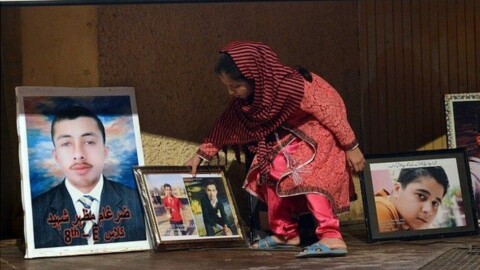


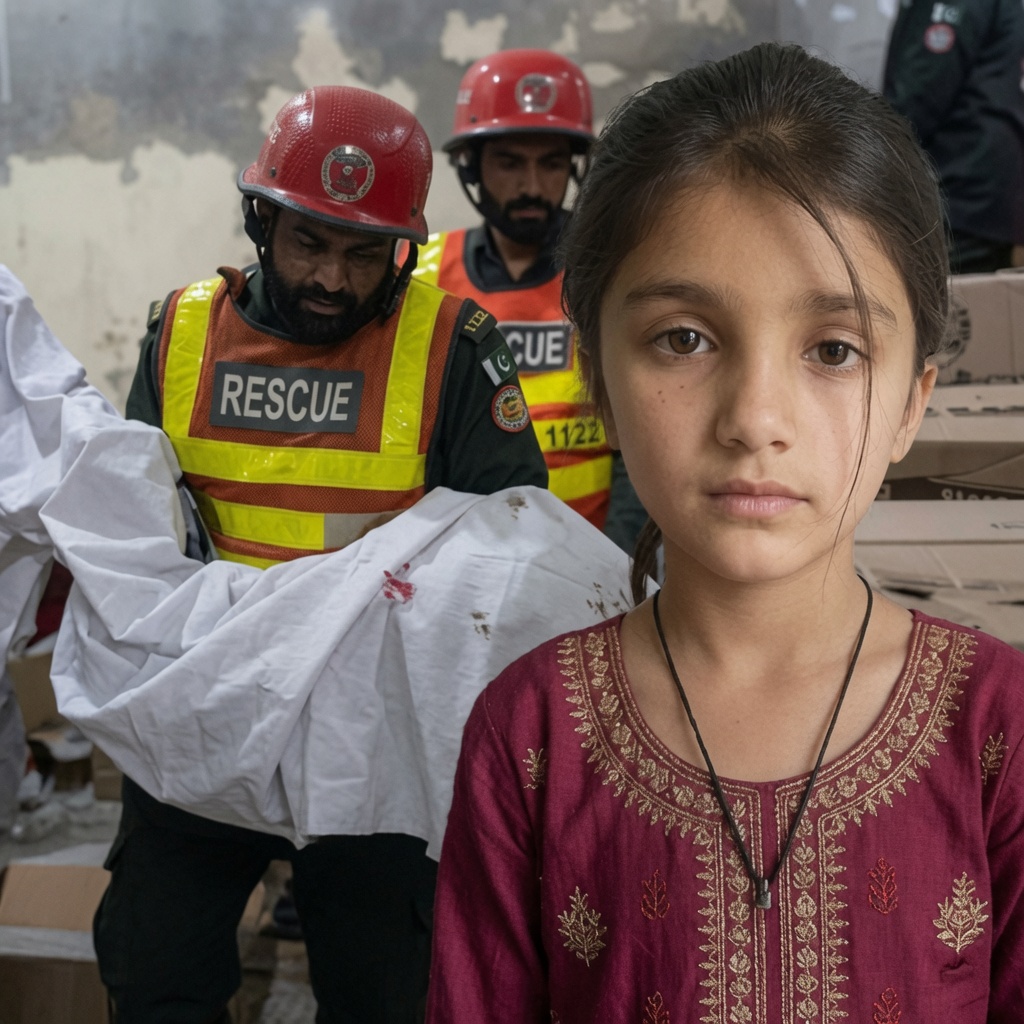
A mere 7-year-old girl went to a kiryana shop — the one near her house, the one she passed every day, the one in her muhalla that was never meant to be a place of torture for her. She didn’t know monsters were waiting for her on the other side, ready to do something to her that she had never deserved. When she didn’t come back for a while, her parents grew alarmed and began searching for their daughter.
The thugs were adjusting their clothes when her father arrived, and Muntaha was lying on the floor. The poor soul was taking her last breath when her father’s gaze fell upon her. We cannot — and do not want to — imagine what was going through that little girl’s mind. Was her whole life flashing before her eyes, as they say happens when the end is near? Or was the ruthlessness of those animals consuming her thoughts — things she didn’t even know existed in this world? How can someone not only kill a child as delicate as a small flower, but torture her, beat her, when she didn’t even know what it was all for? What did she do to deserve this?
Police have detained four or five men, including the shop’s owner, and sent the prime suspect on physical remand. CCTV reportedly captured a small girl walking toward the shop in her final minutes. None of this has been proven yet. All of it is alleged. A court will decide what happened in that room. But a child is dead, and the country has, once again, gone through its familiar motions of horror.
Her post-mortem report, which has since gone viral on social media, raises difficult questions about where the blame truly lies. The people who committed this horrifying act are obviously to blame — but what about the broader failures that left a little girl unsupervised, walking alone to a store?
Sahil, the child-protection organisation that has tracked these crimes for decades, recorded 3,630 cases of child abuse across Pakistan in 2025. That is an eight percent rise over the previous year, working out to more than nine children abused every single day. And those are only the cases that made it into a newspaper. The real figure is higher, because most families never report. In case after case, the perpetrator turns out to be an acquaintance — a neighbour, a relative, a shopkeeper, a tutor, someone the child already knew. The threat to Muntaha, if the allegations hold, lived right next door.
After a Muntaha, after a Zainab, after a Fatima — the same routine plays out every time. The clip goes viral. Politicians post their grief. A talk-show host raises his voice. Someone demands a public hanging, as though the spectacle of one execution has ever reduced the number on Sahil’s annual report.
After a few months, the news dies down, people move on, and the family tries to piece their life back together — but the danger lingers. There will be another perpetrator and another victim, because the laws here are bendable, and no one seems to truly care about the lives of innocent children in this country.