

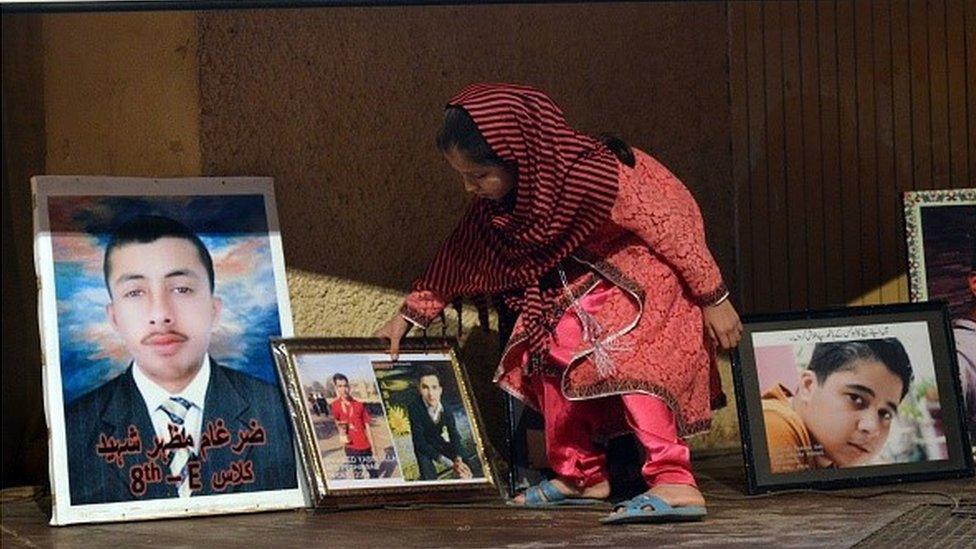
The Peshawar school massacre was a devastating terrorist attack that took place on December 16, 2014, when seven heavily armed Taliban militants stormed an army-run primary and secondary school in Peshawar, Pakistan. The assault resulted in the deaths of 150 people, including at least 134 students, making it one of the deadliest attacks in the country’s history.
At the time, Army Public School had over 1,000 students and staff members, many of whom were children of military personnel. The attackers launched their assault in the late morning, gaining access to the school compound by scaling a boundary wall. Reports later indicated that they detonated explosives near their own vehicle to distract security personnel guarding the premises.
After entering the school, the gunmen made their way to the main assembly hall, where a large group of students was attending a first-aid lesson. They opened fire indiscriminately before moving through classrooms, deliberately targeting teachers and older students. Armed with automatic rifles and grenades, the attackers showed no intention of taking hostages and focused solely on killing.
Pakistan Army Special Services Group (SSG) commandos were deployed and eventually managed to corner the attackers, all of whom were wearing suicide vests filled with explosives. The militants were killed during the operation, while several soldiers sustained injuries from shrapnel. The siege lasted approximately eight hours. During this time, distressed parents gathered outside the school gates, desperately awaiting news of their children.
According to official figures, 150 people lost their lives, and more than 100 others were injured in the attack.
Responsibility for the massacre was claimed by Tehreek-e-Taliban Pakistan (TTP), which described the assault as retaliation for military operations against its members. Analysts widely believed the attack was linked to Operation Zarb-e-Azb, the government’s major counter-terrorism offensive in North Waziristan.
The massacre triggered global condemnation and profound national grief. In its aftermath, Pakistan lifted a six-year moratorium on the death penalty and carried out executions of several convicted militants.